

Security and Peace in Eastern DRC: An Assessment Meeting in Lomé on the AU Peace Process and the Situation on the Ground
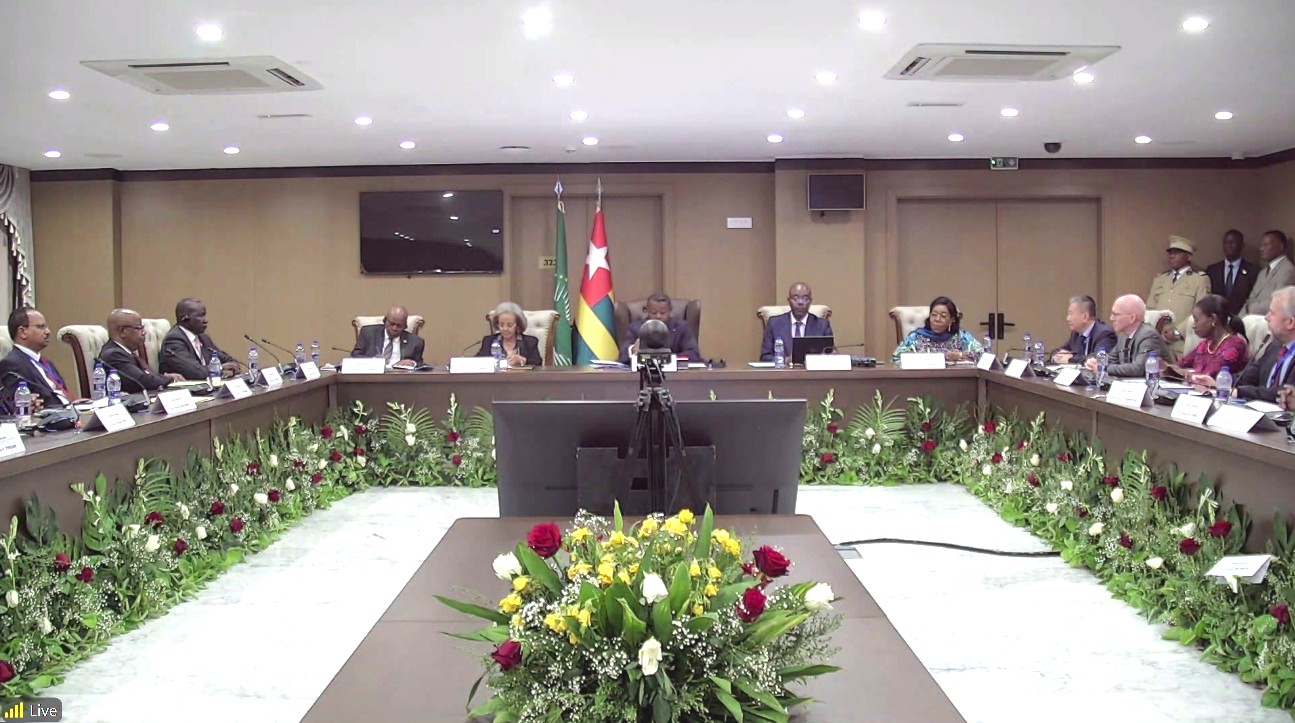
The President of the Council, Faure Essozimna Gnassingbé, the African Union Mediator for the resolution of the crisis in eastern Democratic Republic of Congo (DRC) and the Great Lakes region, chaired a high-level meeting in Lomé on Monday, June 8, 2026, dedicated to the semi-annual evaluation of activities carried out within the framework of the African mediation. This important meeting brought together, under the auspices of the Togolese mediation team, members of the College of Facilitators appointed by the African Union, representatives of the United Nations, the East African Community (EAC), the Economic Community of Central African States (ECCAS), the Southern African Development Community (SADC), the International Conference on the Great Lakes Region (ICGLR), and the International Committee of the Red Cross (ICRC). Progress in structuring African mediation welcomed The President of the Council, Faure Essozimna Gnassingbé, welcomed the presence of the facilitators, regional organizations, and international partners at this evaluation meeting, which demonstrates their continued commitment to peace, stability, and development in the Great Lakes region. He particularly welcomed the progress made since the Lomé meeting, which focused on the coherence and consolidation of the peace process in the DRC and the region. “We have taken a significant step forward since January by bringing more order to the architecture of African mediation. I am convinced that this meeting marks a significant advance in improving our collective action and in the search for lasting solutions to this crisis,” declared the African Union Mediator. While welcoming these advances, President Faure Essozimna Gnassingbé stressed the need to continue efforts to further strengthen coherence and coordination among the various mediation mechanisms involved in the peace process in this region of the continent. A renewed commitment to peace in eastern DRC Reaffirming his determination to pursue the mission entrusted to him by the African Union, the President of the Council emphasized the need to maintain collective mobilization in support of stability in eastern DRC. “We will pursue this mission with humility, determination, and perseverance.” “Despite the challenges, we also see the existence of many willing parties ready to support us in this pursuit of peace,” he emphasized. Faced with this determination, the parties concerned commended the leadership of the President of the Council, who has placed inclusive dialogue, the coordination of diplomatic initiatives, and the search for African solutions at the heart of the crisis resolution process. They also reaffirmed their commitment to supporting the implementation of his guidelines, particularly the strengthening of trust among the stakeholders, the harmonization of mediation mechanisms, and the consolidation of progress made on the ground. Strategic guidelines for the second half of 2026 The meeting adopted several guidelines, including strengthening internal coordination between the Office of the Mediator, the Panel of Facilitators, the African Union Commission, and the Independent Joint Secretariat. The stakeholders also highlighted the importance of structuring and providing an African contribution to the complementary processes in Washington and Doha to increase their ownership, legitimacy, and facilitate their implementation. The participants also called on all States and organizations engaged in mediation efforts to strengthen their cooperation in a spirit of solidarity, while respecting the responsibilities and mandates defined in the mediation architecture adopted in Lomé on January 17, 2026. Immediate Decisions To maintain the momentum initiated by the President of the Council, the meeting adopted several measures aimed at strengthening the effectiveness of the mediation process. These include adjusting the work plans of the members of the Panel of Facilitators for the second half of 2026, as well as developing, within fifteen days, an operational action plan specifying the modalities for implementing the decisions reached. Driven by a renewed collective will and a spirit of shared responsibility, the participants pledged to diligently and consistently implement the decisions of this meeting, to honor their commitments, and to work together towards achieving lasting peace in eastern Democratic Republic of Congo (DRC) and the Great Lakes region. This semi-annual review meeting follows the high-level meeting on the coherence and consolidation of the peace process in the Democratic Republic of Congo (DRC) and the Great Lakes region, held on January 17, 2026, at the initiative of the African Union Mediator. The Lomé meeting aimed to promote the alignment of various peace initiatives in order to strengthen the centrality of the African mediation process.

Togo presented its new ‘Togo-Sahel (2026–2028)’ strategy during a high-level meeting
On 18 April 2026, Togo hosted a High-Level Meeting in Lomé on its New Togo-Sahel Strategy (2026–2028), under the patronage of His Excellency Mr Faure Essozimna GNASSINGBE, President of the Council. This New Strategy builds on Togo’s ongoing commitment to the Sahel and replaces the previous Strategy of 2021, which served as the framework for the country’s action in the Sahel over the last four (4) years. The regional and international environment is currently undergoing profound geopolitical upheavals and realignments, characterised by persistent threats to peace and security challenges. In the Sahel, the terrorist threat persists and is gradually spreading towards the coastal states of the Gulf of Guinea. A geopolitical realignment has taken place in the West African region with the withdrawal of Burkina Faso, Mali and Niger from the Economic Community of West African States (ECOWAS) and the creation of the Alliance of Sahel States (AES). The challenge of taking further action in the interests of regional stability remains a priority. It is against this backdrop that, under the leadership of His Excellency Faure Essozimna GNASSINGBE, Togo has drawn up a New Togo-Sahel Strategy (2026–2028) aimed at adapting its engagement in the Sahel to emerging realities, whilst strengthening its contribution to regional stability and cooperation between the countries of the Sahel and those of the Gulf of Guinea. Current developments in the Sahel and West Africa call for a shift in approach and enhanced coordination among all stakeholders. Given this regional context, it has become necessary to adopt a New Togo-Sahel Strategy, which will guide Togo’s actions in the region over the next three years. La réunion de Haut Niveau, de ce 18 avril 2026, a revetu une importance particulière. Elle a offert une occasion précieuse et rassemblé les représentants régionaux et les acteurs internationaux pertinents autour des échanges fructueux sur la Nouvelle Stratégie et la région du Sahel en pleine mutation depuis la création de l’Alliance des États du Sahel (AES). The overall aim of this high-level meeting is to foster constructive dialogue on the New Togo-Sahel Strategy (2026–2028) and the Sahel region. More specifically, it aims to:

Participation of Prof. Robert DUSSEY to the 62nd Munich Security Conference
At the invitation of H.E. Mr. Wolfgang ISCHINGER, Ambassador and Chairman of the Munich Security Conference (MSC), H.E. Prof. Robert DUSSEY, Président of LPSF and Minister of Foreign Affairs, Cooperation, African Integration and Togolese Abroad, took part in the 62nd Munich Security Conference, held in Munich, Federal Republic of Germany, on 12 and 13 February 2026. A major event in global strategic diplomacy, this edition was devoted to the profound geopolitical changes underway, the evolution of the international order and the prospects for reshaping the global security architecture in a context marked by the fragmentation of traditional balances, the intensification of regional crises and global economic uncertainties. Togo’s participation in this meeting is part of the proactive diplomacy promoted by H.E. Mr. Faure Essozimna Gnassingbé, President of the Council, and within the conceptual framework promoted by the Lomé Peace and Security Forum (LPSF), a Togolese strategic platform dedicated to reflection on African peace and security issues. The LPSF advocates an integrated approach to contemporary crises, linking security, development and social cohesion, as well as strong African leadership in formulating responses to the continent’s challenges. The positions expressed in Munich are fully in line with this doctrinal dynamic. On the sidelines of the proceedings, the Togolese Foreign Minister held a series of high-level bilateral consultations, notably with: These exchanges provided an opportunity to deepen the strategic dialogue on regional security, stabilisation in the Sahel and coastal areas, and prospects for economic and humanitarian cooperation. The Minister outlined Togo’s vision based on the inseparable triptych of security, development and social cohesion, a principle that also underpins the work of the LPSF. He stressed that the fight against terrorism cannot be limited to a strictly security-based response, but must include investment in vulnerable territories, community resilience and the socio-economic inclusion of youth. Referring to the security situation in West Africa and the Sahel, he called for the strengthening of intelligence sharing, operational capabilities and regional coordination mechanisms, in a spirit of collective responsibility and strategic solidarity. On 13 February 2026, H.E. Prof. Robert DUSSEY participated as a panellist in two segments of the official programme devoted respectively to ‘Humanitarian Assistance’ and the theme: ‘Restart or Repair? Towards a New Development Paradigm’. S’agissant de l’assistance humanitaire, il a mis en garde contre les effets des réductions de financements sur les États fragiles, soulignant que l’affaiblissement des réponses d’urgence compromet également les perspectives de stabilisation durable. Il a plaidé pour un financement plus prévisible et dépolitisé, ainsi qu’une meilleure articulation entre action humanitaire, sécurité et développement. Une approche cohérente avec la philosophie du LPSF, qui privilégie le traitement des causes structurelles des crises. Concernant la réforme de l’architecture financière internationale, il a estimé qu’un rééquilibrage de la gouvernance mondiale constitue un impératif stratégique. Il a appelé à une représentation plus équitable des pays africains dans les instances décisionnelles et à un changement de paradigme passant d’une logique d’assistance à une dynamique d’investissement structurant, adossée à un rôle catalytique renforcé des banques multilatérales de développement. Par sa participation active à la 62ᵉ Conférence de Munich sur la Sécurité, le Togo réaffirme sa volonté de contribuer à une gouvernance internationale plus inclusive et plus équitable. Fait à Munich, le 13 février 2026

High-Level Meeting on Coherence and Consolidation of the Peace Process in the Democratic Republic of the Congo and the Great Lakes Region
At the invitation of His Excellency Faure Essozimna GNASSINGBE, President of the Council of the Togolese Republic and Mediator of the African Union, within the framework of efforts to resolve the conflict and the security situation in eastern Democratic Republic of the Congo (DRC), a High-Level Meeting was held on 17 January 2026 in Lomé, Togolese Republic, on coherence and consolidation of the peace process in the Democratic Republic of the Congo and the Great Lakes region. The High-Level Meeting was chaired by His Excellency Faure Essozimna GNASSINGBE. The following personalities took part in the proceedings: The Ministers of Foreign Affairs and representatives of the Democratic Republic of the Congo, the Republic of Rwanda, the Republic of Angola, the Republic of Burundi, the Republic of Uganda, the United States of America, the State of Qatar, the French Republic and the Togolese Republic also took part in the Meeting. The Chairperson of the African Union Commission, His Excellency Mahmoud Ali Youssouf, representatives of the United Nations, the East African Community (EAC), the Southern African Development Community (SADC), the International Conference on the Great Lakes Region (ICGLR), the International Contact Group for the Great Lakes Region, as well as numerous international partners and representatives of civil society participated in the proceedings. The High-Level Meeting reviewed the diplomatic efforts undertaken at the African and international levels over the past twelve (12) months to reopen channels of dialogue between the parties to the conflict and to accelerate momentum towards de-escalation and negotiated solutions. It recalled the conclusions of the meeting held by the Mediator with the Panel of Facilitators on 17 May 2025 in Lomé, and welcomed the combined efforts of the Mediation led by the Togolese Republic, the East African Community (EAC) and the Southern African Development Community (SADC), in support of the return to lasting peace in eastern DRC and the strengthening of stability in the Great Lakes region. The High-Level Meeting welcomed the diplomatic efforts of the United States of America that led to the signing of the Washington Declaration of Principles on April 25, 2025, the Washington Peace Agreement of June 27, 2025, the agreement of the Regional Economic Integration Framework of November 7, 2025, and the Washington Peace Agreements of December 4, 2025, between the DRC and Rwanda. It also welcomed the Doha talks led by the State of Qatar, which led to the Doha Declaration of Principles of July 19, 2025, followed by the Doha Framework Agreement for a Comprehensive Peace Agreement with eight thematic protocols, signed on November 15, 2025. The Meeting also welcomed the holding, on 30 October 2025 in Paris, of the Conference in Support of Peace and Prosperity in the Great Lakes Region. The Mediator reaffirmed his availability to work jointly with the United States of America and the State of Qatar as well as all stakeholders, in the implementation of the signed agreements and in the continuation of the Doha negotiations between the Government of the DRC and the AFC/M23. I. CONSOLIDATION OF THE COHERENCE OF MEDIATION EFFORTS The High-Level Meeting underscored the need to strengthen harmonization, coherence, and coordination among all peace initiatives, in order to capitalize on existing synergies and to avoid any fragmentation of mediation efforts to the detriment of peace and stability in eastern DRC. In this regard, the Meeting endorsed the revision of the Mediation architecture, with the Independent Joint Secretariat as a technical support mechanism to the Panel of Facilitators. The Meeting reaffirmed the role of the Panel of Facilitators as a central political support mechanism to the Mediation, acting in a coordinated and complementary manner and in strict accordance with the mandates entrusted by the Mediator. The Meeting emphasized the need to ensure close harmonization with international initiatives, in order to guarantee coherence of messaging, respect for political sequencing, and alignment of external support with the priorities defined under the Mediation. II. CONSOLIDATION OF THE PEACE PROCESS IN EASTERN DRC, TAKING INTO ACCOUNT RECENT DEVELOPMENTS The High-Level Meeting called upon the Parties to accelerate the good-faith implementation of their respective commitments and to prioritize peaceful means in the management and resolution of the conflict. The Meeting reaffirmed its full support to the Doha process and urged the Parties to resume talks without delay in order to conclude negotiations on the remaining six (6) Protocols. It stressed the importance of structured African follow-up of the implementation of the agreements and the evolution of the peace process. III. DECISIONS OF THE HIGH-LEVEL MEETING The following decisions conclude the proceedings of the Meeting: a) Alignment on the principle of the centrality of the Mediation led by the Togolese Republic; b) Harmonization of the understanding and ownership of the unified mediation process at the African level; c) Alignment of stakeholders around the revised Mediation architecture; d) Adoption of a Mediation Framework Document, based on the situational assessment and analysis of the dynamics of the peace process; e) Adoption of the Facilitators’ Work Plan as operational instruments to guide the coordinated action of the Panel; IV. MISCELLANEOUS AND NEXT STEPS The Participants expressed their profound appreciation to the Government and the people of the Togolese Republic for the warm hospitality and facilities extended to the delegations, as well as for Togo’s steadfast commitment to supporting the Mediation. The participants reaffirmed their collective determination to pursue, in a spirit of coherence, coordination, and shared responsibility, the efforts undertaken in order to durably consolidate the peace process and to promote peace, security, and stability in the Democratic Republic of the Congo and the Great Lakes region. Done in Lomé, 17 January 2026

The silent lesson of Lomé: restoring confidence in African diplomacy
(By Christopher Burke, Senior Advisor, WMC Africa) The Second Lomé Forum on Peace and Security, held in Togo, offered an unexpected lesson for African regional politics. At a time when formal diplomacy too often boils down to ultimatums and ruptures, Lomé calmly reminded us that dialogue remains possible—even between estranged partners. In West Africa, the rift between the Economic Community of West African States (ECOWAS) and the Alliance of Sahel States (AES) has turned into an open divorce. Mali, Burkina Faso, and Niger have rejected any idea of returning to ECOWAS, describing their separation as “irreversible” and “liberating.” What could have been a diplomatic impasse became, in Lomé, an opening where the two sides were able to exchange views frankly, without foreign mediation. The real achievement of the forum lay not in the agreements reached, but in the atmosphere created. It was a safe space for honest political discourse, chaired with restraint by Abdisaid Muse Ali, former Somali Minister of Foreign Affairs. The AES ministers formulated a clear vision of sovereignty, autonomy, and dignity. Malian Abdoulaye Diop declared, “Forget our return to ECOWAS; we are already beyond that,” while Niger’s Bakary Yaou Sangaré insisted on the need for Africa to “correct the imbalances of history” and ensure that natural resources fully benefit its citizens. Lomé also gave a voice to those calling for reconciliation. Former Senegalese Prime Minister Aminata Touré proposed an “AES-ECOWAS consultation framework,” which was immediately supported by former ECOWAS Commission President Dr. Mohamed Ibn Chambas. Their intervention shifted the debate: the question was no longer whether the AES should return to ECOWAS, but how the two could coexist in the same region. It was a subtle victory of realism over rhetoric. Lessons for Central Africa The Lomé experience has particular resonance in the Democratic Republic of Congo (DRC) and its neighboring countries. The Great Lakes and Central Africa have their own version of fragmented regionalism. The DRC belongs to both the East African Community (EAC) and the Southern African Development Community (SADC), but coordination between these two blocs remains difficult. This overlap fuels mistrust and complicates the management of peace operations, trade corridors, and cross-border security. Like ECOWAS and AES, both EAC and SADC claim to have the same goal: regional peace and prosperity. However, their competing mandates in eastern Congo have sometimes exacerbated tensions rather than easing them. Regional military interventions are accompanied by political suspicion, revealing not only differences in strategy, but also deeper issues of sovereignty, accountability, and trust. Lomé’s quiet diplomacy reflects this situation. It shows that African regions do not need perfect consensus to engage in dialogue. Dialogue does not require formal reintegration or external sponsorship; it requires a neutral space, political will, and mutual respect for differences. Diplomacy beyond institutions Togo’s role as a neutral mediator demonstrates that diplomacy can be conducted outside traditional institutional frameworks. Lomé’s “Track Two and a Half” format—bringing together government officials, experts, and civil society—has proven that informal diplomacy can succeed where official summits fail. This approach could inspire similar spaces where regional actors, including members of the SADC and EAC, would discuss common security and economic priorities without preconditions. The DRC could take the lead in such a model. A “Kinshasa Dialogue” or “Goma Peace Platform,” bringing together neighboring states and independent experts, could play for Central Africa the role that Lomé played for the Sahel: easing tensions, addressing grievances, and enabling pragmatic cooperation. The value of candor Another lesson from Lomé is the importance of candor. The direct remarks of the AES ministers disturbed some, but their honesty prevented polite denial from masking the truth. Lomé succeeded by allowing friction without rupture. In Central Africa, this type of dialogue is essential. The region’s diplomatic culture often favors deference over candor. Yet mistrust persists around military intentions, mineral smuggling, and political alliances. Lomé showed that openly acknowledging these tensions can be the first step toward resolving them. From unity to coexistence The Lomé Forum did not produce unity; it established coexistence. It recognized that regional integration cannot be decreed; it must evolve through concrete cooperation on trade, migration, infrastructure, and environmental protection, where interests converge. For the DRC, this lesson is crucial. The country cannot afford to choose between regional blocs or reduce its diplomacy to tests of loyalty. Its geography makes it a natural bridge between the SADC, the EAC, and the Economic Community of Central African States (ECCAS). By harmonizing customs systems, developing electrification corridors, and strengthening resource governance, the DRC can transform its central position into a diplomatic asset rather than a dividing line. African agency in practice Lomé also illustrated a broader trend: the rise of African agency. The forum, focused on youth and artificial intelligence, showed that peace and stability no longer depend solely on weapons or treaties, but on inclusion, innovation, and shared prosperity. Investing in digital tools for early warning, transparent resource management, and youth employment is fully in line with this vision. Trust is not built solely at the negotiating table; it is strengthened when citizens perceive justice, opportunity, and dignity in governance. The courage to speak The lesson of Lomé is simple but profound. Dialogue remains the continent’s most underutilized instrument of power. When silence sets in, mistrust takes root; when people talk to each other, even angrily, possibilities are reborn. Lomé offered this possibility in West Africa: a space where estranged neighbors could engage in dialogue without losing face. Central Africa, and the DRC at its heart, can draw inspiration from this. Sovereignty is not isolation; it is the ability to forge one’s destiny through freely chosen cooperation based on trust. The silent lesson of Lomé is that Africa’s strength lies less in the volume of its declarations than in the consistency of its dialogue. ———- Source : laprosperiteonline.net

The President of the Council, His Excellency Faure Gnassingbé, presided the second edition of the LPSF
The second edition of the Lomé Peace and Security Forum (LPSF), themed « Africa facing complex security challenges: How to strengthen and sustain peace and stability in a changing world? , » officially opened on October 11, 2025, in Lomé, chaired by His Excellency Faures Gnassingbé, President of the Council of Togo, in the presence of Liberian President His Excellency Joseph Boakai and former Nigerian President Olusegun Obasandjo. This high-level meeting, which aims to provide a platform for strategic dialogue to promote solutions tailored to the challenges of stability and sustainable development on the African continent, brought together heads of state and government, ministers, and leaders of regional and international institutions, as well as representatives of civil society. In his speech, the Togolese head of state shared several strong convictions for rethinking security on the African continent. He began by emphasizing the need for African strategic autonomy. In his view, African states must be the main actors in their own security by defining their own priorities and building a common and solid security agenda. President Faure Gnassingbé then emphasized local cohesion and social justice, stressing that “peace cannot be decreed, it must be built.” He recalled that this requires inclusion, community dialogue, and the active participation of women, young people, and civil society. Security, he added, is not just a matter of weapons, but also of education, health, and governance. He also called for strengthening prevention and anticipation in the face of threats such as terrorism, transnational crime, disinformation, and cyberattacks. For him, it is essential to move from reaction to prevention through more effective cooperation and responsible use of new technologies. Finally, the Head of State called for a new approach to financing peace. Believing that “security has a cost,” he stressed the need for African states to be able to assume this responsibility without excessive dependence on external financing or increasing their debt. He proposed that security spending in Africa be recognized as a global public good in order to sustainably support stabilization efforts on the continent. “Lomé must remain a place where we dare to say that peace is not a naive dream, but a demanding strategy,” concluded President Faure Gnassingbé, reaffirming Togo’s commitment to making this forum an African space for dialogue, action, and international influence.

The challenges of the 2nd edition of the Lomé Peace and Security Forum (LPSF 2025) with Dr. Koffi AGNIDE
In this episode of “Our Africa – The Voice of Pan-African Diplomacy,” we welcome Dr. Agnide, Senior Lecturer at the University of Lomé, Advisor to the Minister of Foreign Affairs of Togo, and Chair of the Scientific Subcommittee of the 2nd edition of the Lomé Peace and Security Forum (October 11–12, 2025 – Lomé, Togo). 🎙 Dr. Agnide discussed:– The objectives and challenges of this new edition of the Forum,– The expected results and diplomatic significance of the event,– New geopolitical rivalries and Africa’s place in a changing world,– And Togo’s central role in building an African dialogue for peace and security. The Lomé Peace and Security Forum (LPSF) has become an essential space for reflection and action on security challenges in Africa, bringing together political leaders, diplomats, experts, researchers, and civil society around a common vision: an Africa that is an actor in its own security and a partner to the world. More info at lpsf.tg Follow the interview 👇🏿https://www.youtube.com/watch?v=xIaGlXXMiko
Launch of the Global Peace and Security Alliance (GPSA) initiative
The number of threats to international peace and security has increased in recent years, with the emergence of new sources of tension and new forms of conflict. These threats are complex and create situations of insecurity at a time when regional frameworks and international mechanisms for effective crisis and conflict management and response have been significantly weakened. In the perspective of development of innovative and resilient mechanisms capable of adapting to the complex challenges of our time, H.E.Mr. Faure Essozimna GNASSINGBE, Togolese diplomacy is launching the Global Peace and Security Alliance (GPSA) initiative within the framework of the Lomé Peace and Security Forum, in partnership with several other forums around the world that are also committed to peace and security. ———————————————————————————————————————–

Prof. Robert Dussey to the Fourth Aswan Forum for Sustainable Peace and Development
The président of LPSF, Prof. Robert Dussey, Minister of Foreign affairs of Togo took part to the fourth edition of the Aswan Forum for Sustainable Peace and Development, titled “Africa in a Changing World: Re-Envisioning Global Governance for Peace and Development” on 2 and 3 July 2024, in Cairo, Egypt. The Forum welcomed African leaders and key figures who came together with the aim of advancing conflict prevention, peace building and strengthening the links between peace and development. At a time of unprecedented challenges to peace and security in Africa and globally, the fourth edition of the Aswan Forum seeks to advance African perspectives on re-envisioning global governance for peace and development, in a dialogue with partners, in anticipation of the “Summit of the Future”. The only way we can find peace and development in our countries is if our leaders decide not to act in their own interests, but in the common interest of our people in our countries.@AswanForum @CairoPeaceKeep #Africanophonie#APA #AfricanPoliticalAlliance#PanafricanCongress… pic.twitter.com/91timPHT5e — Robert Dussey (@rdussey) July 2, 2024

